Battery swelling, burning smell, or unusual heat
Stop using the computer. Disconnect external power only when that can be done safely, then use the manufacturer or a qualified hardware specialist.

Computer Repair
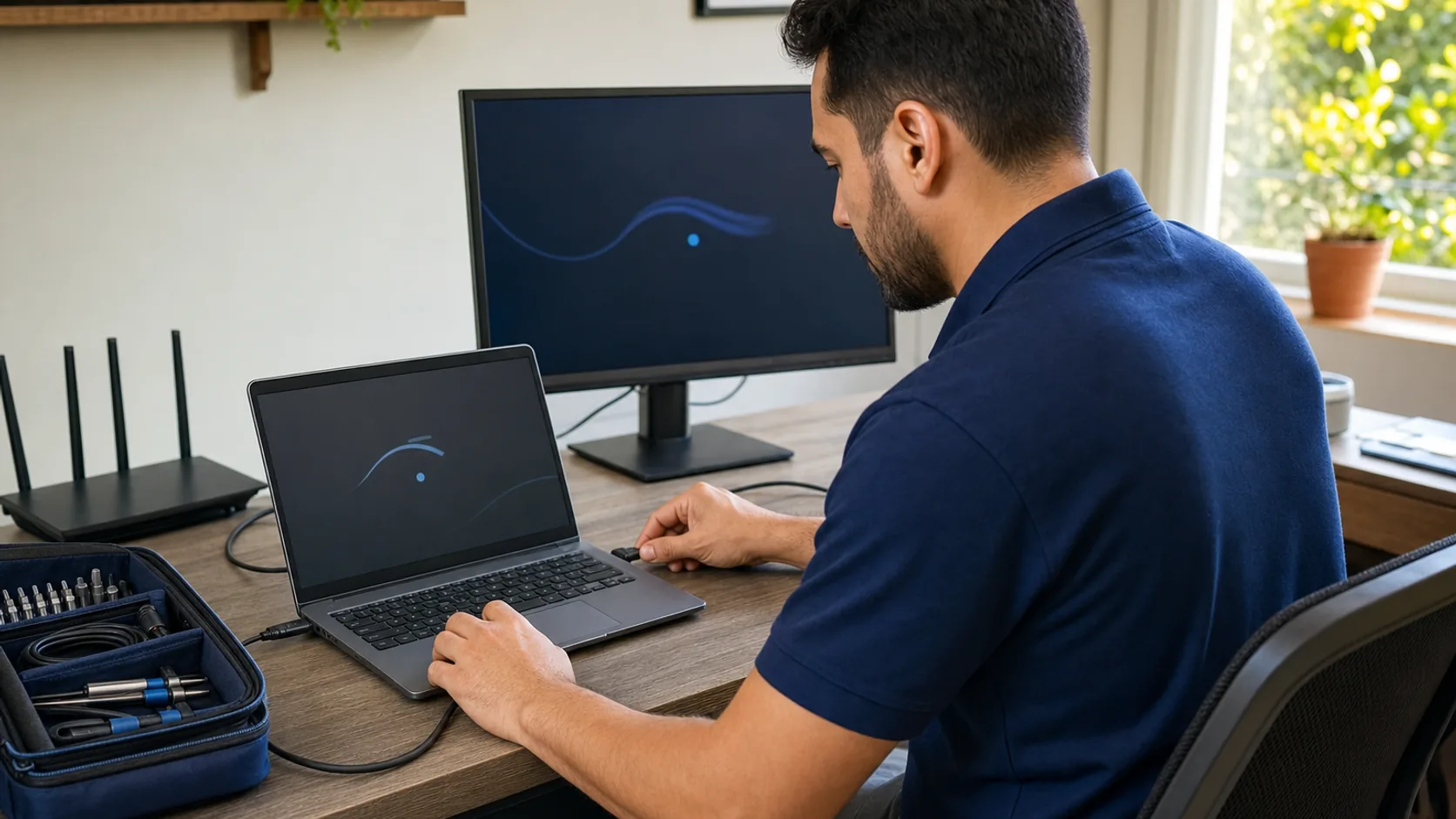
A computer that appears dead can have a power, charger, dock, display, Windows startup, storage, or hardware problem. The safest first step is to identify the last reliable clue, protect important data, and choose the right support route without opening the device or starting a destructive reset.
Guide updated
Start with simple checks. Get expert help when the fix needs more.
Power, fan activity, screen output, and where startup stops help separate power, display, Windows, and drive problems.
Start with the last reliable clue
Observe first and change as little as possible. The point is to choose the right support route, not to guess at a repair.
Safe observation: After checking a known-working outlet and the computer’s normal power lead, note any charger light, case light, fan, or startup sound.
Recommended next step: No response usually needs an on-site power-path check, or the manufacturer when warranty coverage applies.
Safe observation: Note whether the monitor has power, which input is selected, whether a dock or external display changes the result, and any beep or blink pattern.
Recommended next step: Use an on-site display and hardware diagnostic; a remote session cannot start before the computer shows a usable desktop.
Safe observation: Record the exact logo, loop, recovery, or error screen only if it contains no private information or recovery key, then note what changed recently.
Recommended next step: Use a startup or Windows diagnostic; choose the device or organization vendor when warranty or management controls apply.
Safe observation: Note when the freeze begins and whether the computer stays stable long enough to protect current work and confirm an existing backup.
Recommended next step: A stable desktop may allow remote triage; repeated crashes or drive warnings belong on the on-site or data-recovery path.
Stop now
Stop using the computer. Disconnect external power only when that can be done safely, then use the manufacturer or a qualified hardware specialist.
Do not power it on again or use heat to dry it. Keep ordinary troubleshooting paused and use the appropriate hardware or manufacturer route.
Stop repeated power-on attempts. If the files matter, ask a data-recovery specialist before normal repair work.
Do not run repair tools, initialize the drive, reset the computer, or reinstall Windows before getting recovery advice.
Choose the right kind of help
The computer reaches a usable desktop, connects to the internet, and stays stable long enough for an approved session.
There is no power, a black screen, an early startup loop, a dock or monitor question, or uncertain physical hardware.
Warranty, battery swelling, liquid or impact damage, managed business equipment, or specialized hardware work is involved.
A drive clicks, grinds, disappears, or holds irreplaceable unbacked-up data that further testing could put at risk.
Customer-controlled information
Useful details are the device model, visible lights or sounds, the exact non-sensitive screen, recent changes, and whether an existing backup matters.
Do not send passwords, MFA codes, BitLocker or other recovery keys, private files, or sensitive screenshots.
Nothing here authorizes a reset, reinstall, format, firmware change, drive repair, or opening the device. Diagnosis, recovery planning, and explicit approval come first.
Facts checked July 14, 2026
Recovery tools can change files, apps, settings, or access. Read the current Microsoft guidance and confirm backup importance before choosing one.
Detailed checklist
Open this when you need the BitLocker, no-boot-device, update-loop, backup, and specialist details.
How Tech Genie helps
Tech Genie identifies the cause, handles the agreed work, and explains what changed and what to do next.
FAQ
No. A power, display, update, or Windows startup problem does not automatically mean the storage has failed. Recovery still cannot be guaranteed, so stop repeated testing when the drive makes unusual sounds, disappears, or holds irreplaceable files without a backup.
Usually not if the computer cannot reach a stable desktop and internet connection. Remote triage can work when Windows loads and stays usable; no power, black-screen, and early-boot problems usually need an on-site, vendor, or specialist path.
Not as a diagnostic shortcut. A reset can remove apps, settings, or data and can make recovery planning harder. First record the exact screen, confirm backup status, and understand whether the problem is Windows, storage, encryption, or hardware.
No. BitLocker protects the owner's data, and Tech Genie does not bypass encryption or guarantee recovery. The owner or authorized organization must retrieve an available recovery key through its approved Microsoft, work, school, or documented account path.
Keep troubleshooting
Use age, storage, drive health, memory, startup load, and update state to decide whether cleanup, upgrades, or replacement make sense.
Read guide 3 min
Compare Windows 11 readiness, consumer ESU, business migration, and replacement without forcing unsupported hardware or risking your files.
Read guide 9 min
Trace unreliable workdays across internet, Wi‑Fi, docks, monitors, printers, and video calls instead of replacing everything.
Read guide 3 min
Tech Genie is not a licensed contractor. Construction-related work is limited to casual, minor, or inconsequential projects totaling less than $1,000 for labor, materials, and all other items, requiring no building permit, and performed without employees or paid helpers.